A withdrawal that should take minutes can stretch into days if you pick the wrong method, submit an incomplete form, or misjudge your institution's processing calendar. That gap between expectation and reality is where most frustration lives. Understanding how the mechanics actually work - not just which button to press - separates people who get their money on time from those refreshing their account balance in disbelief.
Every financial platform, whether a traditional bank, a digital wallet, or a trading account, builds its own rules around identity checks, transfer limits, and processing windows. Some of these rules exist for security. Others exist because of outdated back-office systems that haven't caught up with instant payments. If you've ever searched for how to withdraw my money and found conflicting answers, you're not alone - the process varies enough between providers that generic advice often falls short.
This piece breaks down the entire withdrawal landscape: the cash options still available in a mostly digital economy, the bank transfer mechanics that move the bulk of global funds, and the exact sequence of steps that keeps a withdrawal request from stalling. By the end, you'll know not just what to click, but why each step exists and how to avoid the delays that catch most people off guard.
Understanding the Basics of Fund Withdrawal
What Does Withdrawing Funds Actually Mean
Withdrawing funds means converting a balance held inside an account - bank, brokerage, e-wallet, or payment platform - into a form you can spend or move elsewhere. That could mean physical cash, a transfer to another bank account, or a reload onto a card. The underlying action is the same: an instruction is sent to the institution holding your money, and that institution verifies, processes, and releases it. Knowing how to withdraw funds correctly starts with recognizing that this is a formal request, not an instant guarantee, even when the interface makes it look like a one-click action.
Why Withdrawal Isn't Always Instant
Instant withdrawals exist, but they're the exception built on top of a system designed for batch processing. Banks settle transactions in cycles, often overnight, and weekends or public holidays pause that cycle entirely. Fraud-detection systems may also flag a request for manual review, especially for larger amounts or first-time transfers to a new destination. None of this means something went wrong - it means the safeguards are doing their job.
Common Reasons Withdrawals Get Delayed
Most delays trace back to a handful of predictable causes:
- Incomplete or mismatched identity verification documents
- Incorrect bank account or routing details entered during setup
- Withdrawal requests submitted outside business processing hours
- Amounts exceeding daily or account-tier limits
- Pending deposits that haven't cleared, which some platforms require before releasing funds
Cash Withdrawal Options Explained
ATM Withdrawals
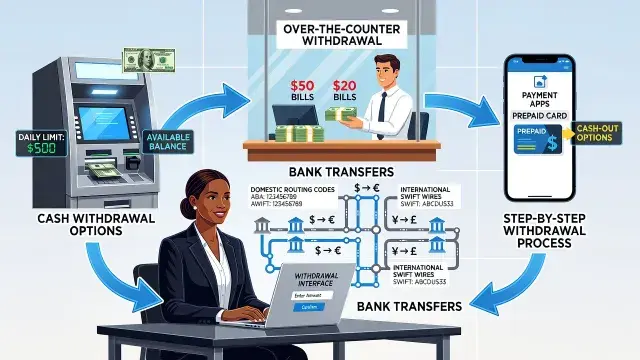
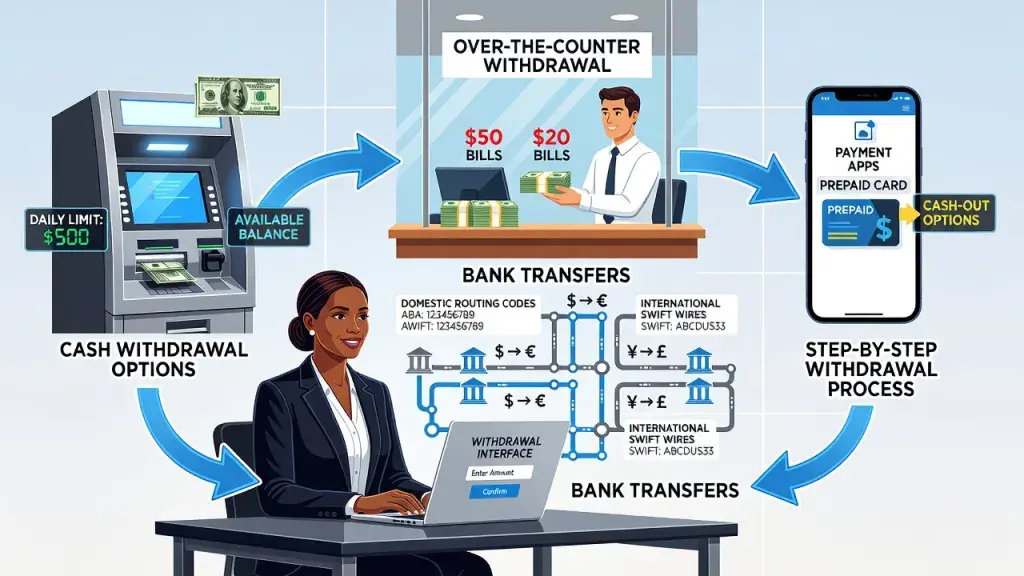
ATMs remain the fastest route to physical cash for most account holders. Daily limits typically range from a few hundred to a couple thousand currency units, depending on the bank and account type. International withdrawals often carry a currency conversion fee plus a flat charge from both the card issuer and the ATM operator, so checking your bank's fee schedule before traveling saves unpleasant surprises.
Over-the-Counter Withdrawals
Walking into a branch still has advantages: higher withdrawal ceilings, the ability to request specific denominations, and a teller who can resolve identity or account issues on the spot. This option suits larger cash needs - paying a contractor, handling a real estate transaction, or simply preferring a paper trail confirmed by a human rather than a machine.
Cash Withdrawal via Payment Apps and Prepaid Cards
Digital wallets increasingly offer a bridge between online balances and physical cash, either through partner ATM networks or retail cash-out points at pharmacies and convenience stores. These cash withdrawal options are convenient for people without a traditional bank account, though fees per transaction tend to run higher than a standard bank ATM.
How to Transfer Money to a Bank Account
Domestic Bank Transfers
Moving funds between accounts in the same country is generally the cheapest and fastest transfer method. Same-day or next-business-day settlement is standard in most developed banking systems, and fees are often waived between accounts at the same institution. To transfer money to bank accounts domestically, you typically need only the recipient's account number and the bank's routing or sort code.
International Wire Transfers
Cross-border transfers involve intermediary banks, currency conversion, and compliance checks that domestic transfers skip entirely. Processing can take one to five business days, and fees are charged by the sending bank, the receiving bank, and sometimes an intermediary in between. Providing accurate SWIFT/BIC codes and the recipient's full legal name exactly as it appears on their account prevents the most common cause of rejected wires.
Linking and Verifying Bank Accounts for Transfers
Before you can withdraw money from account balances into an external bank, most platforms require a verification step - a micro-deposit confirmation, a linked debit card check, or document upload. This isn't bureaucratic friction for its own sake; it confirms the receiving account genuinely belongs to you and blocks a significant share of fraudulent withdrawal attempts.
Step-by-Step Withdrawal Process
Preparing Your Account for Withdrawal
Before initiating anything, confirm your identity verification is complete, your linked bank details are current, and your available balance actually covers the amount you intend to withdraw (accounting for any pending holds). Skipping this preparation is the single most common reason a request bounces back for correction.
Submitting the Withdrawal Request
Log into your account, navigate to the withdrawal or transfer section, and select your destination - bank account, card, or cash pickup. Enter the amount, double-check the destination details, and confirm. Many platforms send a verification code by email or SMS at this stage as a final security checkpoint.
Processing Time and Confirmation
Once submitted, the request enters a review queue. Simple, previously verified withdrawals often clear within hours; new destinations or larger sums may take longer while compliance teams review them. You should receive a confirmation notice once funds are released, along with an estimated arrival window for the receiving account.
What to Do If a Withdrawal Is Delayed or Rejected
Check your notifications and email first - most rejections come with a specific reason, such as a name mismatch or an expired verification document. If the cause isn't clear, contact support directly with your transaction reference number ready. Following the correct withdrawal process steps from the start dramatically reduces the odds you'll ever need this step.
Fees, Limits, and Security Considerations
Understanding Withdrawal Fees
Fees vary by method: ATM withdrawals often carry flat charges, international wires include multiple bank cuts, and instant transfers sometimes cost a premium for the speed. Comparing the total cost against processing time helps you choose the option that actually fits your situation rather than defaulting to habit.
Daily and Monthly Withdrawal Limits
Limits exist to contain fraud exposure and manage liquidity. They typically scale with account tier, verification level, and transaction history. A newly opened account will almost always face tighter caps than one with months of verified activity behind it.
Keeping Your Withdrawal Secure
Use two-factor authentication wherever it's offered, verify the destination account details character by character before confirming, and avoid initiating withdrawals over public Wi-Fi. Security here isn't optional friction - it's the layer standing between your balance and anyone who's compromised your login credentials.
Frequently Asked Questions
Can I withdraw funds without a linked bank account?
Yes, many platforms allow cash pickup, prepaid card loading, or transfers to a linked e-wallet as alternatives. These options typically carry higher fees than a direct bank transfer but don't require full bank verification.
Why was my withdrawal request put on hold?
Holds usually happen when identity documents need re-verification, the destination account is new, or the amount exceeds your current limit tier. Reviewing your account notifications will usually specify the exact reason within a day or two.
How long does a bank transfer withdrawal actually take?
Domestic transfers often settle within one business day, while international wires can take three to five business days due to intermediary bank processing. Weekends and public holidays extend these windows since most banking networks don't process on non-business days.
Is it cheaper to withdraw cash from an ATM or a bank branch?
Branch withdrawals are generally cheaper for large amounts since many banks charge flat ATM fees regardless of the sum withdrawn. For smaller, routine amounts, ATMs are usually more convenient without a significant cost difference.
What information do I need before I transfer money to bank accounts abroad?
You'll need the recipient's full legal name, account number or IBAN, the bank's SWIFT/BIC code, and sometimes the bank's physical address. Missing or mistyped details are the leading cause of delayed or returned international transfers.
What should I do if I'm unsure about the correct process?
Check your platform's dedicated support page for a clear walkthrough - for example, a resource explaining how to withdraw my money is often available at https://betfm.com/faq/how-to-withdraw-2/ and can clarify platform-specific steps before you submit a request. Reading this before your first withdrawal prevents most avoidable errors.